


Shower repair is not always covered by home insurance. In most cases, policies only cover sudden and accidental water damage, such as a burst pipe or unexpected leak. Issues caused by wear and tear, failed waterproofing, cracked grout, poor maintenance, or long-term leaks are usually excluded.
In this blog, we’ll unpack the inconvenient truths about shower repair, water damage, and insurance claims, including what insurers typically look for and how to better prepare your claim when coverage may apply.
Home insurance rule for water damage
Water damage has become one of the biggest risks for Australian homeowners. According to Chubb Australia, water damage accounts for 34% of property claims, which is more than double the rate of fire-related claims at 16%. The cost of these claims has also risen sharply. From 2014 to 2018, water damage claims increased by 72%, with the average claim cost rising from A$17,627 to A$30,361.
The risk is even higher in Western Australia and Victoria, where claim rates are reported to be 20% above the national average, according to Plumber Magazine.
Before diving into the specifics, everything in home insurance coverage for water damage comes down to a single principle that Australian insurers apply universally: “If it occurs all at once, it’s covered. If it drags on, it isn’t.”
This isn’t informal advice. It reflects the explicit policy language used by major Australian insurers, including AAMI, Suncorp, and CommBank. Your policy covers sudden and accidental damage caused by a defined event. It does not cover gradual deterioration, wear and tear, or damage that could have been prevented with routine maintenance.
For showers specifically, this distinction is brutal. The vast majority of shower leaks, including failed waterproofing membranes, cracked grout, and degraded sealant, are gradual by nature. They develop slowly over the years. And that means they fall squarely into the excluded category, regardless of how severe the resulting damage becomes.
Important: Waterproofing membranes have a lifespan of just 10–15 years. When they fail, and they will, that failure is classified as a maintenance issue, not an insurable event, by virtually every Australian insurer.
What is and isn’t covered for shower damage?
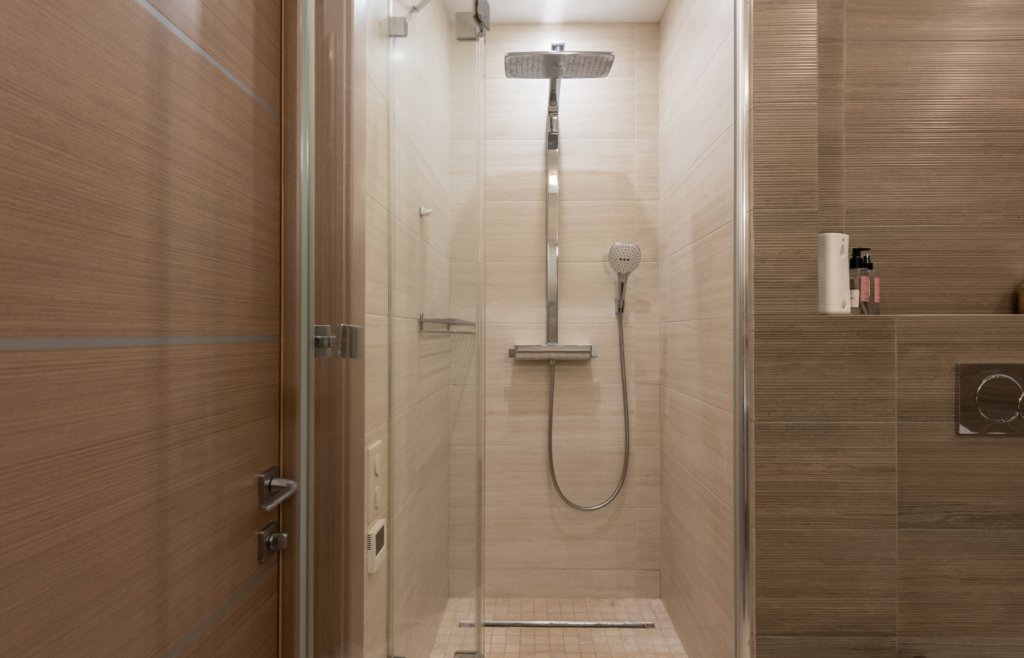
Here is the practical coverage breakdown for Australian homeowners, based on standard policy terms from AAMI, Suncorp, Allianz, and CommBank:
| Likely covered | Not covered |
| Sudden burst pipe in shower wall Accidental overflow — single event Resulting damage to floors/walls/ceilings if the cause is sudden fire or smoke damage to the bathroom | Gradual escape of liquid Faulty or leaking shower recess/base Wear and tear / poor maintenance Failed waterproofing membrane Poor installation or workmanship Mould from a neglected leak |
Critical distinction: Even when consequential water damage is covered, the cost to fix the shower itself remains your responsibility. Insurance pays for what the leak damaged, not the source of the leak.
One often-overlooked hazard: burst flexi-hoses.
Suncorp data shows flexi-hoses account for 1 in 10 water damage claims in Australia, with an average claim cost exceeding A$27,500. Around 30% of inspected hoses need replacement. Because a flexi-hose failure is sudden, it typically is covered, but the shower or vanity itself still isn’t.
The real financial cost when you’re not covered
Understanding what you’ll likely be paying out of pocket is essential for planning. Industry data shows undetected leaks can add A$300–$1,200 per year to your water bills alone before any structural damage is factored in.
| Type of Repair | Estimated Cost |
| Basic shower repair/renovation | A$1,000–$5,000 |
| Structural damage repair | A$10,000–$25,000 |
| Mould remediation | A$2,000–$8,000 |
| Professional waterproofing (preventive) | A$500–$1,500 |
Chubb Australia’s data shows the average water damage claim has grown from A$17,627 in 2014 to A$30,361 by 2018 — a 72% increase in just four years. Water damage now accounts for 34% of all property claims, nearly four times the rate of burglary claims (9%) and double the rate of fire claims (16%).
For Western Australian homeowners, the picture is even starker. WA records claim rates 20% above the national average, alongside Victoria, driven by local building methods and ageing infrastructure.
Nearly 40% of Australians have experienced water leaks from heavy rain, according to NRMA Insurance’s 2024 data, yet fewer than 20% of homeowners take active precautions against water damage.
How to file a claim and strengthen your position
If your shower damage was caused by a sudden event (such as a burst pipe), here’s how to give your claim the best chance of success:
Document immediately.
Photograph and video the damage before touching anything. Timestamps matter.
Mitigate further damage.
Shut off the water supply and dry the area — but don’t make permanent repairs before the adjuster visits.
Get a plumber’s report.
A written statement confirming the cause was sudden and accidental (e.g. pipe failure, not gradual corrosion) significantly strengthens your claim.
Show your maintenance records.
Receipts for past grout repairs, resealing, or plumber inspections demonstrate you weren’t negligent which can be decisive for borderline claims.
Understand your excess.
Many water damage claims cost A$5,000–$10,000. Factor in your policy excess before deciding whether to lodge a claim at all, as claims can affect future premiums.
If your claim is denied: You can request an internal review, escalate to the Australian Financial Complaints Authority (AFCA), or engage a public loss assessor to argue on your behalf. A denied claim is not always final.
Final thoughts
The bottom line is that shower repair itself is rarely covered by home insurance in Australia unless the damage is caused by a sudden, unexpected event. Gradual leaks from worn grout, failed membranes, ageing sealant, or poor maintenance are usually excluded.
With water damage claims rising by 72% and WA claim rates sitting 20% above the national average, proactive shower maintenance is one of the most cost-effective ways to protect your property.
This is where The Shower Repair Centre can help. By identifying and repairing leaking showers early, often without the need for tile removal, our team helps homeowners prevent small leaks from becoming major water damage issues.
If you’ve noticed signs of a leaking shower, such as cracked grout, mould, musty smells, loose tiles, or water stains, contact us today for an inspection and expert advice on the best repair solution for your bathroom.
FAQs
Is a leaking shower covered by home insurance in Australia?
Rarely. Most shower leaks result from gradual waterproofing failure, which is explicitly excluded by Australian insurers, including AAMI, Suncorp, and CommBank. Coverage only applies if the leak was caused by a sudden, unexpected event like a burst pipe.
Does insurance cover water damage from a shower leak?
Sometimes, but only the resulting damage (floors, walls, ceilings), and only if the cause was sudden. The cost to fix the shower itself is almost never covered, even when downstream damage is.
Will insurance pay for a failed shower waterproofing membrane?
No. Waterproofing membranes have a 10–15-year lifespan, and their failure is classified as a maintenance issue. This is one of the most commonly cited exclusions across Australian policies.
What if mould develops from the shower leak?
Mould from a neglected or gradual leak is excluded. If mould results directly from a covered sudden event (e.g. a burst pipe), it may be included in that claim. But you’ll need to demonstrate the causal link clearly to the insurer.
Is there anything else that can help cover shower repairs?
A home warranty may cover certain plumbing breakdowns, while strata properties may have body corporate insurance depending on where the leak starts. Check both policies before assuming you are not covered.
About the Author:
Mark Studdert is the founder of The Shower Repair Centre, specialising in shower leak repairs, waterproofing, leak detection, and bathroom restoration. With over three decades of experience, he pioneered and patented the DiamoSmart® technology, helping save leaking bathrooms without tile removal in 95% of cases.