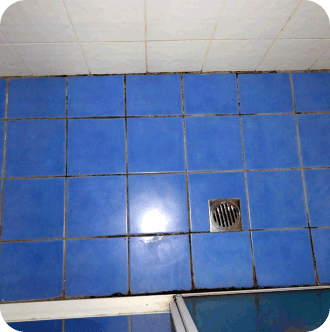
Did you know that up to 70% of bathroom leaks start from cracked or poorly sealed tiles? Tiny cracks in your shower tiles might not seem like a big deal—but left unsealed, they can quickly lead to leaks, mould, and long-term water damage.
When it comes to repairing hairline cracks in shower tiles, two of the most common options are silicone and epoxy. Both have strong sealing properties, but they serve different purposes depending on the type of crack, tile material, and location within the shower.
If you’re unsure which one is better for your bathroom, understanding how these sealants work will help you make a more informed decision.
Understanding Silicone Sealant
Silicone is one of the most common products used for sealing joints and edges in bathrooms. It’s known for being flexible, waterproof, and resistant to mould and mildew, which makes it ideal for wet areas such as showers, sinks, and bathtubs.
Advantages of Silicone for Shower Repairs
- Flexibility:
Silicone remains pliable even after curing, allowing it to expand and contract as the temperature and humidity change. This flexibility is important in showers, where heat and moisture fluctuate daily. - Waterproofing Ability:
High-quality bathroom silicone provides excellent water resistance, preventing leaks through seams or joints. - Easy Application:
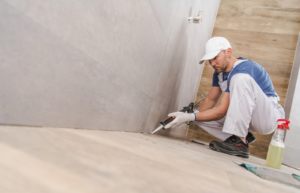
It can be applied directly over small cracks or along grout lines without specialised tools. Once cured, it forms a watertight seal that’s easy to maintain.
When Silicone Works Best
Silicone is ideal for sealing hairline cracks at tile edges or corners, especially where tiles meet shower screens, walls, or tubs. It’s also effective for preventing water intrusion in joints between tiles and fixtures.
However, silicone is not a structural repair material. It doesn’t bond strongly enough to fill or reinforce the tile itself—meaning it’s not the right choice for cracks running through the tile’s surface or glaze.
Understanding Epoxy Resin
Epoxy, on the other hand, is a strong, durable resin that’s often used in industrial and construction applications. It creates a hard, chemical-resistant surface once cured, forming a bond that’s much stronger than silicone.
Advantages of Epoxy for Shower Repairs
- High Bond Strength:
Epoxy adheres firmly to most surfaces, including ceramic, porcelain, and stone tiles. Once set, it forms a hard, durable layer that can restore small cracks effectively. - Chemical and Water Resistance:
Epoxy is highly resistant to moisture, detergents, and cleaning chemicals, making it suitable for areas exposed to frequent water contact. - Long-Term Durability:
Unlike silicone, which can degrade or discolour over time, epoxy retains its strength and finish for years when properly applied.
When Epoxy Works Best
Epoxy is recommended for hairline cracks within the tile body or glaze rather than along joints or seams. Because it hardens into a rigid material, it’s ideal for repairing minor surface fractures that don’t experience movement.
In cases where the crack runs deep or spreads across multiple tiles, an epoxy repair compound can provide a semi-permanent fix—although heavily damaged tiles may still need replacement.
Both materials provide waterproof protection, but their performance depends on the nature of the damage. Silicone works as a sealant, while epoxy acts more as a filler and adhesive.
How to Choose Between Silicone and Epoxy for Hairline Cracks
To decide which material to use, assess the type, size, and location of the crack:
- Cracks Along Tile Edges or Joints
Use silicone to reseal these areas. It’s flexible enough to move with the tile and prevents water from seeping through gaps. - Cracks Through the Tile Surface
For visible hairline fractures running across a tile, epoxy provides a stronger, longer-lasting solution. - Cracks Caused by Movement:
If the underlying substrate is shifting or expanding, silicone is the better choice because of its flexibility. Epoxy may eventually crack again in these conditions. - Cosmetic vs Structural Damage:
For purely cosmetic hairlines, epoxy can help restore the tile’s appearance. For moisture-related sealing, silicone is more effective.
In many cases, both materials are used together—epoxy to repair the crack, and silicone to reseal the surrounding joints for extra waterproofing.
Introducing TSRC’s DiamoSmart™ Technology
For the most effective and long-lasting solution, The Shower Repair Centre (TSRC) takes sealing and waterproofing a step further with their patented DiamoSmart™ technology.
TSRC’s DiamoSmart™ combines the best of epoxy with cutting-edge application techniques, providing a permanent seal for hairline cracks and grout joints. This advanced system not only seals cracks but also strengthens the entire shower surface, ensuring waterproofing that lasts. The DiamoSmart™ system is designed to tackle the common issues that come with traditional shower repairs, like mould, leaks, and deterioration.
The epoxy-based DiamoSmart™ technology is engineered to offer superior performance, providing an abrasion-resistant, waterproof seal that lasts for decades. With TSRC’s DiamoSmart™, your hairline cracks and grout lines will be fully sealed, ensuring your shower stays dry, clean, and mould-free—backed by a 25-year warranty for peace of mind.
Ready to eliminate hairline cracks and protect your shower with lasting waterproofing?
Contact The Shower Repair Centre today and ask about the DiamoSmart™ technology for your home!